OTONEURO MONACO

video-head-impulse-test-monaco
video-head-impulse-test-otoneuro-monaco

VIDEO HEAD IMPULSE TEST ( VHIT )

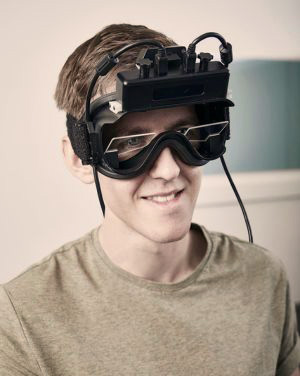
The Video Head Impulse Test is an examination of the movement sensors of the inner ear (semicircular canals) that uses a video camera coupled with a computer to analyse compensatory eye movements aimed at stabilising vision during very rapid head movements (impulses) caused by the examiner. It is the only vestibular test that allows the three semicircular canals of each ear to be examined individually.

exam-vhit-video-head-impulse
video-head-impulse

What is the purpose of a VHIT?

It allows us to assess the gain (ratio between the speed of movement of the eyes and the speed of movement of the head, ideally equal to one) of the six semicircular canals and, if necessary, in the presence of a deficit that has prevented the eyes from following the movement of the head, to highlight the compensation saccades of the eyes.
When this compensation saccade occurs while the head movement has not yet been completed, it is called a ‘covert saccade’. When it occurs after the end of head movement, it is known as ‘saccade overt’.
The impairment of a canal is then manifested by an abnormal decrease in vestibulo-ocular reflex gain and the presence of compensation saccades. This data is plotted on a graph.
Although it provides valuable information on the functioning of the semicircular canals at high frequencies, it does not question the function of the vestibules at lower frequencies, does not test the function of the otoliths and lacks sensitivity (a deficit of more than 50 per cent in caloric tests is required for VHIT to be abnormal). It must therefore be supplemented by a VNG with caloric tests and otolithic evoked potentials.

Your questions about the Video Head Impulse Test (VHIT):

What is a VHIT?

The VHIT (Video Head Impulse Test) checks whether the motion sensors in your inner ear are working properly during very rapid movements. The aim is to make sure that your eyes keep the image stable when your head moves.

What is a VHIT used for?

The VHIT has several purposes:

  • Confirming or ruling out an inner-ear problem responsible for dizziness or unsteadiness.
  • Determining whether the left ear, the right ear or both are affected.
  • Monitoring progress (recovery/compensation) and guiding vestibular rehabilitation.

Do I need to prepare for a VHIT?

No special preparation is needed for a VHIT. Simply avoid alcohol before the test and let your doctor know if you have any neck problems.

How are VHIT results interpreted?

Here is what the terms on your VHIT report mean:

  • Normal function: the reflex is effective, with no (or very few) catch-up saccades.
  • Possible impairment: the reflex is less effective, with visible catch-up saccades on the side tested.

Results are always interpreted alongside your symptoms and your other tests (VNG, speech-in-noise tests, etc.).


Is the VHIT unpleasant or risky?

The VHIT carries no risk at all: it is a non-invasive test. The head impulses may, however, cause a brief feeling of dizziness. If you suffer from neck pain, it is best not to go ahead with the test.